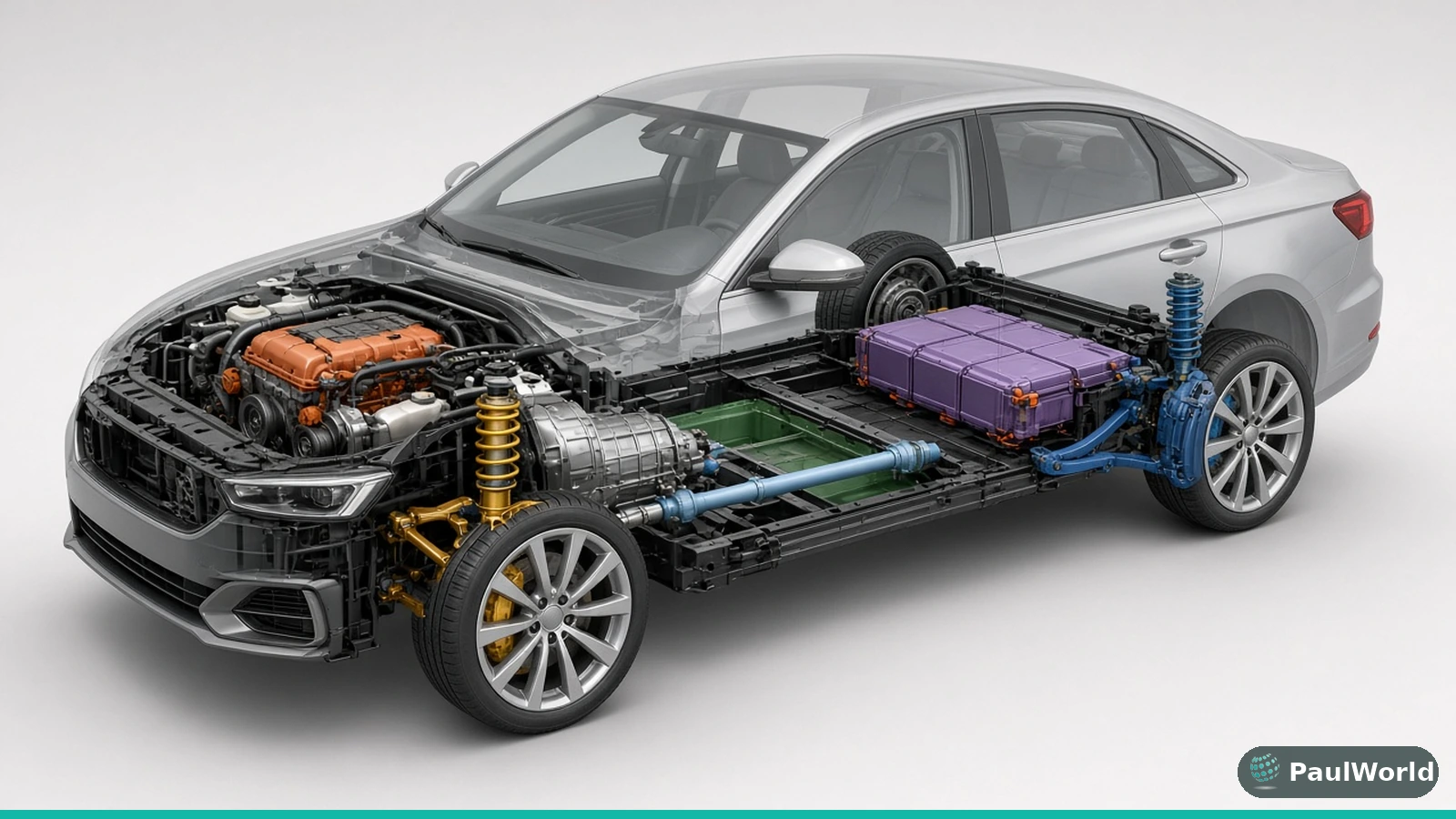
A car works by turning stored energy into motion: the engine burns a mix of fuel and air to spin a crankshaft, the transmission and drivetrain send that spinning force to the wheels, and supporting systems (fuel, electrical, cooling, steering, suspension, and brakes) keep it running, under control, and able to stop. An electric car does the same job with a battery and electric motor instead of an engine and fuel.
Below, we follow the power from the gas tank to the tires, then cover each of the other systems, so you can understand what is happening every time you turn the key.
The Big Picture: How a Car Moves
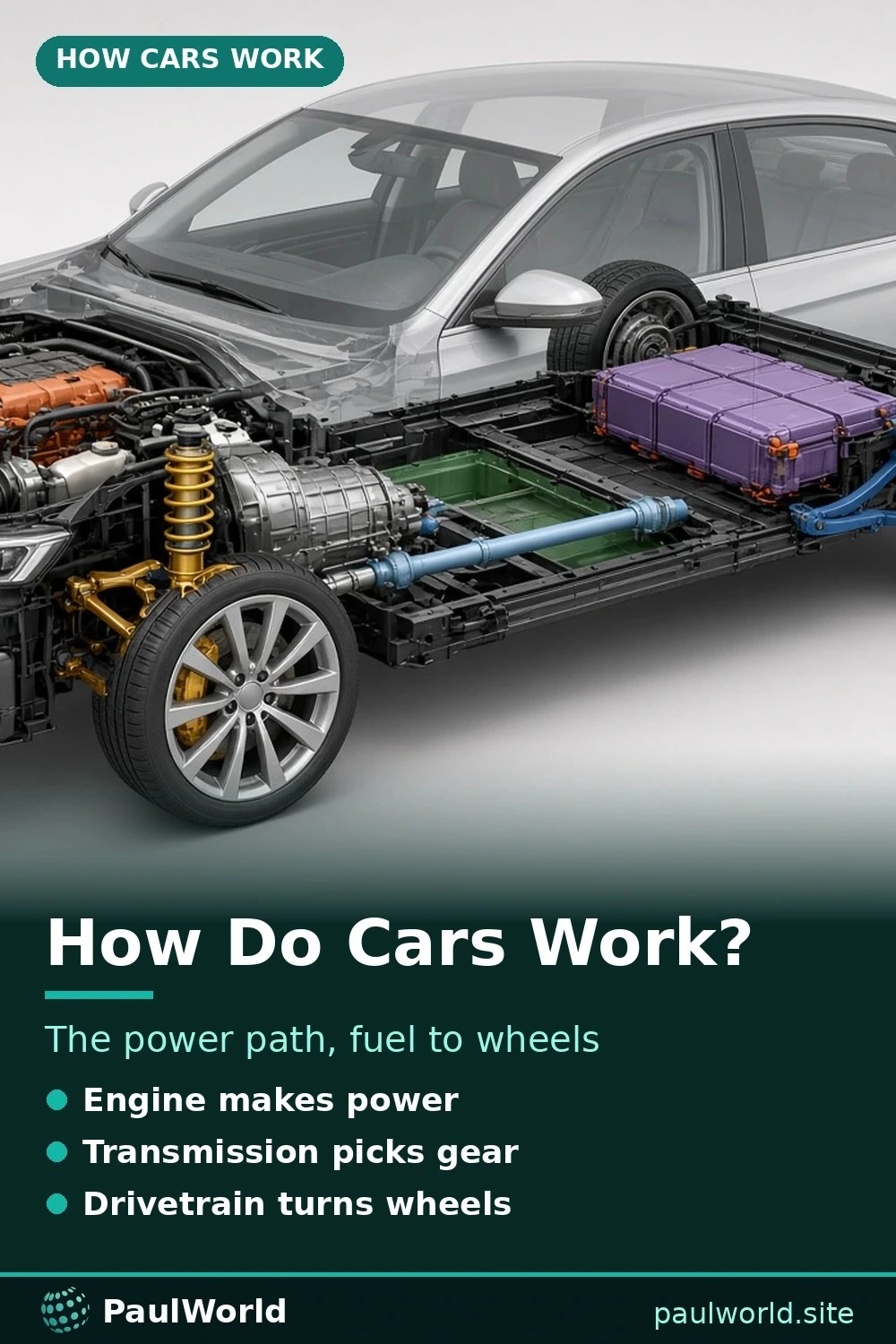
Every car has two jobs: make power and get it to the road, and hold the wheels so the car can steer, stop, and ride over bumps. The power path in a typical gasoline car looks like this:
- Fuel system stores gasoline and delivers it to the engine.
- Engine burns the fuel and air to turn the crankshaft.
- Transmission picks a gear ratio that suits the road speed.
- Driveline (driveshaft, differential, and axles) carries the power to the drive wheels.
- Wheels and tires push against the road and move the car.
How Does a Car Engine Work?
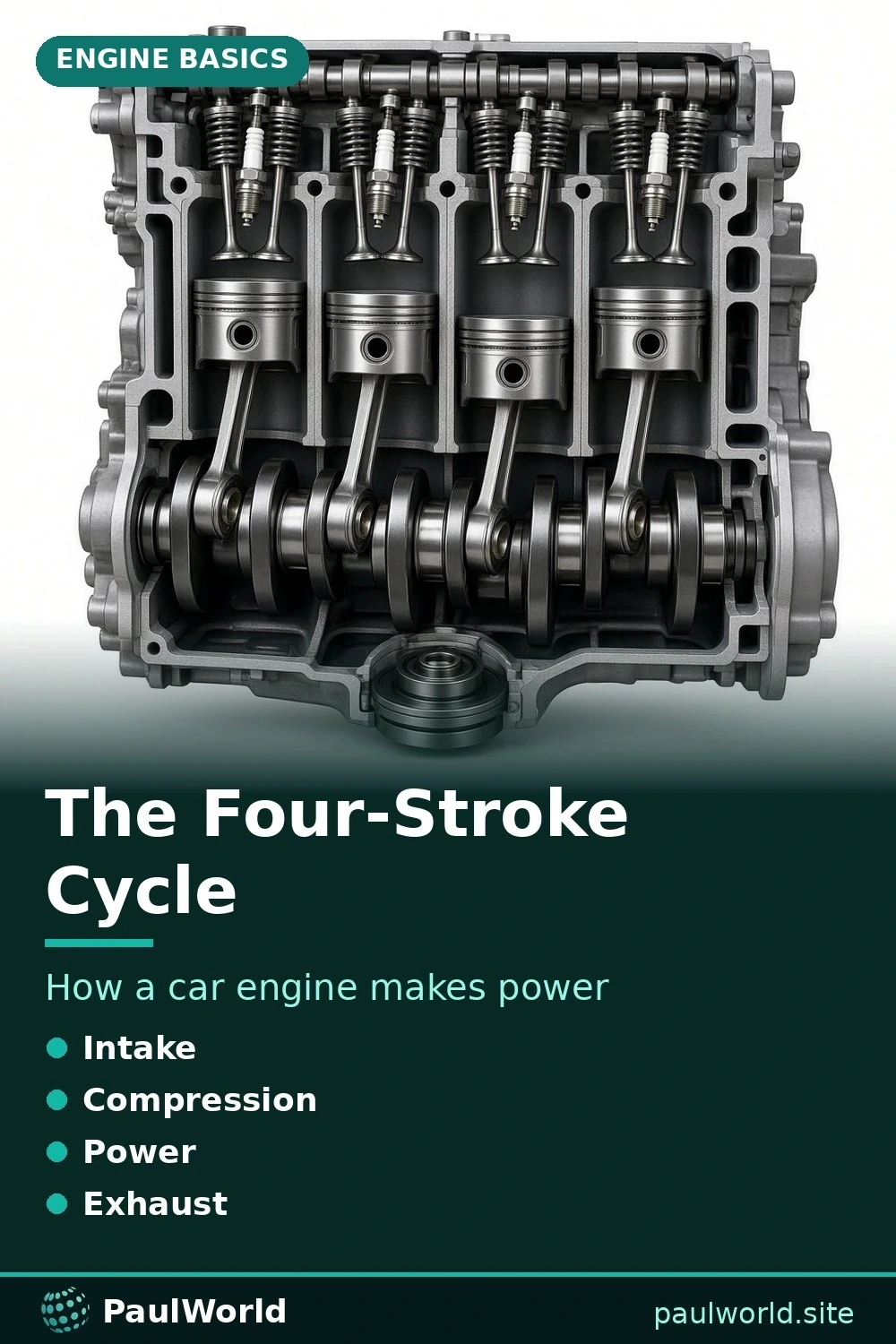
Most gasoline engines use a four-stroke cycle. Inside each cylinder, a piston moves up and down, connected to the crankshaft by a connecting rod:
- Intake: the piston moves down and draws in air and fuel through the open intake valve.
- Compression: the valves close and the piston moves up, squeezing the mixture.
- Power (combustion): the spark plug ignites the mixture, and the expanding gas forces the piston down. This is the stroke that makes power.
- Exhaust: the piston moves up again and pushes burned gases out through the exhaust valve.
The up-and-down motion of the pistons turns the crankshaft, converting straight-line motion into rotation. A camshaft, timed to the crankshaft by a belt or chain, opens and closes the valves at exactly the right moments. Diesel engines follow the same four strokes but ignite the fuel with the heat of high compression instead of a spark plug.
Why Is an Automotive Engine Called a Power Plant?
Mechanics and engineers often call the engine the car’s “power plant” because, like a power station, its job is to convert one form of energy into another. It turns the chemical energy stored in fuel into heat, then into the mechanical energy that drives the car. It is also the source of power for other systems: it spins the alternator that charges the battery, and on many cars it drives the water pump and A/C compressor through a belt.
How Power Reaches the Wheels: Transmission and Drivetrain
An engine only makes useful power in a certain speed range, but a car needs to crawl from a stop and also cruise on the highway. The transmission solves this with gears. Low gears multiply force for starting off; high gears let the engine turn slowly at highway speeds.
- Manual transmissions use a clutch to disconnect the engine while the driver changes gears.
- Automatic transmissions use a torque converter and planetary gear sets to shift on their own.
- CVTs (continuously variable transmissions) use belts or chains and variable pulleys to provide a smooth range of ratios.
From the transmission, power goes to the differential, which splits it between the left and right wheels and lets them turn at different speeds in a corner. In front-wheel-drive cars, the transmission and differential are combined into a transaxle, and CV axles carry power to the front wheels. Rear-wheel-drive cars use a driveshaft to reach a rear differential, and all-wheel-drive cars send power to both axles.
The Other Systems That Keep a Car Running
Fuel and Air Intake
An electric pump in the tank pushes fuel to the engine, where injectors spray precise amounts into the intake or directly into each cylinder. The engine computer adjusts the amount of fuel based on how much air is coming in, measured by sensors.
Electrical System
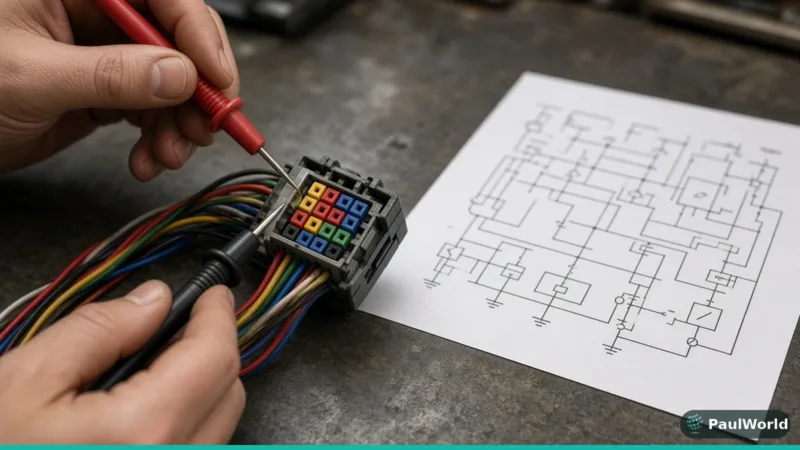
The 12-volt battery powers the starter motor to crank the engine and runs electronics while the engine is off. Once the engine runs, the alternator generates electricity and recharges the battery. Wiring, fuses, relays, and computer modules distribute power to everything from the fuel pump to the headlights. If you want to dig deeper, our guide on how to read automotive wiring diagrams shows how those circuits are mapped.
Cooling and Lubrication
Combustion creates intense heat. A water pump circulates coolant through the engine and radiator, and a thermostat keeps the engine at its ideal operating temperature. Motor oil, pumped through the engine, reduces friction and carries away heat from moving parts.
Exhaust and Emissions
The exhaust system carries burned gases away from the engine, quiets the noise with a muffler, and uses a catalytic converter to reduce harmful emissions. Oxygen sensors report back to the engine computer so it can fine-tune the fuel mixture.
Steering
Most cars use rack-and-pinion steering: turning the steering wheel rotates a small gear (the pinion) that moves a toothed bar (the rack) side to side, which turns the front wheels. Power steering, now often electric, makes the wheel easier to turn.
Suspension
Springs carry the car’s weight and absorb bumps, while shock absorbers (dampers) stop the car from bouncing. Together with control arms and other links, the suspension keeps the tires in contact with the road for grip and comfort.
Brakes
Pressing the brake pedal pushes hydraulic fluid to each wheel, where calipers squeeze brake pads against spinning rotors (or shoes against drums), turning motion into heat to slow the car. Anti-lock brakes (ABS) pulse the pressure to prevent the wheels from locking.
Body and Frame
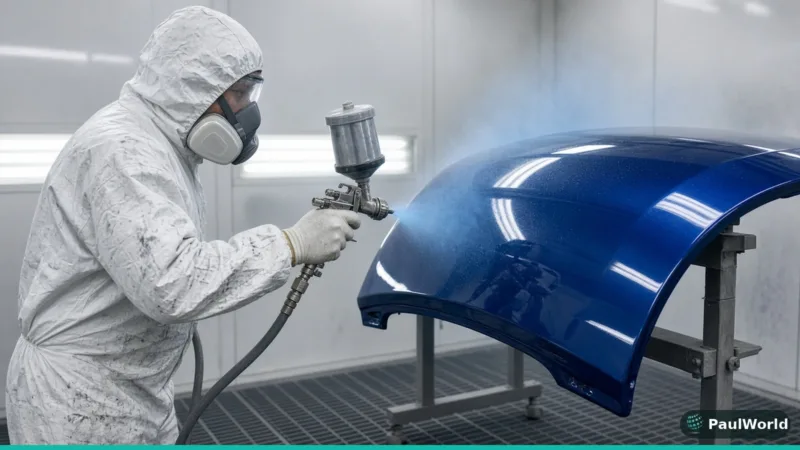
The body and frame hold everything together and protect occupants. Most modern cars use a unibody design, where the body and frame are one welded structure, finished with protective paint. Curious about that finish? See how automotive paint is sprayed.
How Do Electric Cars Work Differently?
A battery electric vehicle replaces the engine, fuel system, and most of the transmission with three main parts: a large high-voltage battery pack, one or more electric motors, and power electronics (an inverter) that control the flow of energy. Electric motors make strong torque from a standstill, so most EVs use a single-speed gear reduction instead of a multi-gear transmission. Many also use regenerative braking, where the motor acts as a generator to slow the car and recharge the battery. Steering, suspension, and the basic friction brakes work much as they do on gas cars.
Follow One Drive: What Happens From Key to Stop
Seeing the systems in order makes them click. Here is a normal trip, step by step:
- You press start. The battery powers the starter motor, which spins the engine until it runs on its own.
- The engine idles. Fuel injectors spray fuel, spark plugs fire, and the alternator takes over powering the electrics and recharging the battery.
- You select Drive and press the accelerator. More air and fuel enter the engine, and it makes more power.
- The transmission picks a gear. Low gears multiply force to get you moving; higher gears let the engine turn slower at cruising speed.
- The differential splits power. On a turn, it lets the outside wheel spin faster than the inside wheel.
- You steer and hit a bump. The steering rack turns the front wheels, while springs and shock absorbers keep the tires on the road.
- You brake. Pressing the pedal pushes brake fluid that squeezes pads against the rotors. Friction turns your motion into heat.
Manual vs Automatic: How Each Connects the Engine to the Wheels
| Manual transmission | Automatic transmission | |
|---|---|---|
| What connects the engine | A clutch, which you engage with your foot | Usually a fluid torque converter (or automated clutches in some designs) |
| Who picks the gear | You, using the shifter | The car’s transmission computer |
| Why you can stop without stalling | You press the clutch to disconnect the engine | The torque converter can slip at idle |
| Common variations | Traditional manual gearboxes | Conventional automatics, CVTs, dual-clutch units |
A CVT (continuously variable transmission) does not have fixed gears at all. It uses a belt or chain between variable pulleys to change the ratio smoothly.
The Forces Every Car Fights
An engine is not just pushing a car forward. It is constantly working against resistance:
- Air drag: It rises roughly with the square of speed, so doubling your speed means about four times the drag. That is a big reason highway speeds burn more fuel.
- Rolling resistance: Tires flex as they roll. Underinflated tires flex more and waste more energy.
- Gravity on hills: Climbing takes extra power, which is why automatics downshift on steep grades.
Pro tip: If your fuel economy suddenly drops, check tire pressure first. It is free, takes two minutes, and is one of the most common causes.
Common mistake: Thinking “more cylinders always means more power.” Modern turbocharged four-cylinder engines can out-produce older V6 and V8 engines. Design matters as much as cylinder count.
Reference: U.S. Department of Energy: How Do Gasoline Cars Work?
Frequently Asked Questions
What are the main systems of a car?
The main automobile systems are the engine, fuel system, transmission and drivetrain, electrical system, cooling and lubrication systems, exhaust and emissions, steering, suspension, brakes, and the body and frame.
What actually makes a car move?
Combustion in the engine pushes the pistons down, which turns the crankshaft. The transmission and drivetrain carry that rotation to the wheels, and the tires’ grip on the road pushes the car forward.
Why does a car need a transmission?
An engine makes useful power only within a limited speed range. The transmission’s gears let the engine stay in that range whether the car is starting from a stop or cruising on the highway.
How does a car start?
When you turn the key or press the start button, the battery powers the starter motor, which spins the engine. Once the engine is turning, fuel and spark begin the combustion cycle and the engine runs on its own.
What is the difference between a differential and a transmission?
The transmission changes the gear ratio between the engine and the wheels. The differential sits further along and splits the power between the left and right wheels, letting them turn at different speeds in corners.
What is the best way to understand how cars work for beginners?
Learn the big systems first (engine, drivetrain, electrical, brakes, steering, and suspension), then open your own hood and match each part to your owner’s manual. Seeing the real parts makes the diagrams make sense.
Putting It All Together
A car is a set of systems working together: the engine makes power, the drivetrain delivers it, and the steering, suspension, and brakes keep you in control. Once you understand that flow, it becomes much easier to diagnose problems and talk with a mechanic. Ready to go further? Start with our roadmap on how to learn about cars, or put the knowledge to work with how to fix a car yourself.
Categories
Tags