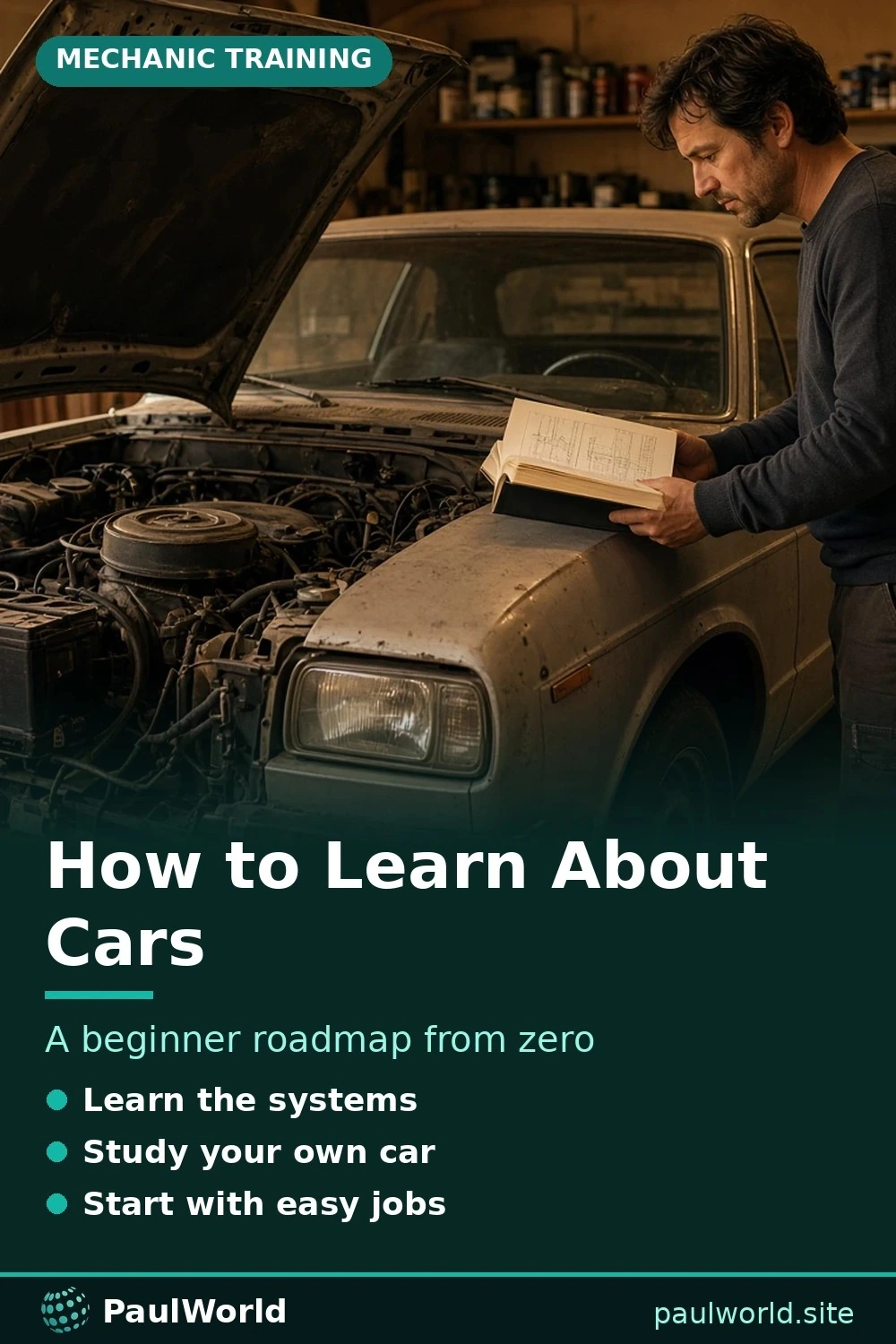
The best way to learn about cars is to combine three things: learn how the main systems work, read the owner’s and repair manuals for your own car, and practice simple, safe jobs on it, moving step by step from basic checks to real repairs. Free online lessons, videos, local community college classes, and help from experienced friends or a shop job can speed things up, but hands-on practice is what makes the knowledge stick.
Here is a beginner roadmap you can follow from zero, plus where to work on your car and how to start on engines and older cars safely.
Step 1: Learn How Cars Work
Before you pick up a wrench, understand what each system does and how they connect. Focus on these in order:
- Engine: the four-stroke cycle, pistons, crankshaft, valves, and ignition.
- Drivetrain: transmission, differential, and axles.
- Fuel, cooling, and lubrication: what keeps the engine fed, cool, and protected.
- Electrical: battery, alternator, starter, fuses, and sensors.
- Chassis: brakes, steering, suspension, and tires.
Our plain-English guide to how cars work covers every one of these systems in a single read and is the best place to start.
Step 2: Study Your Own Car
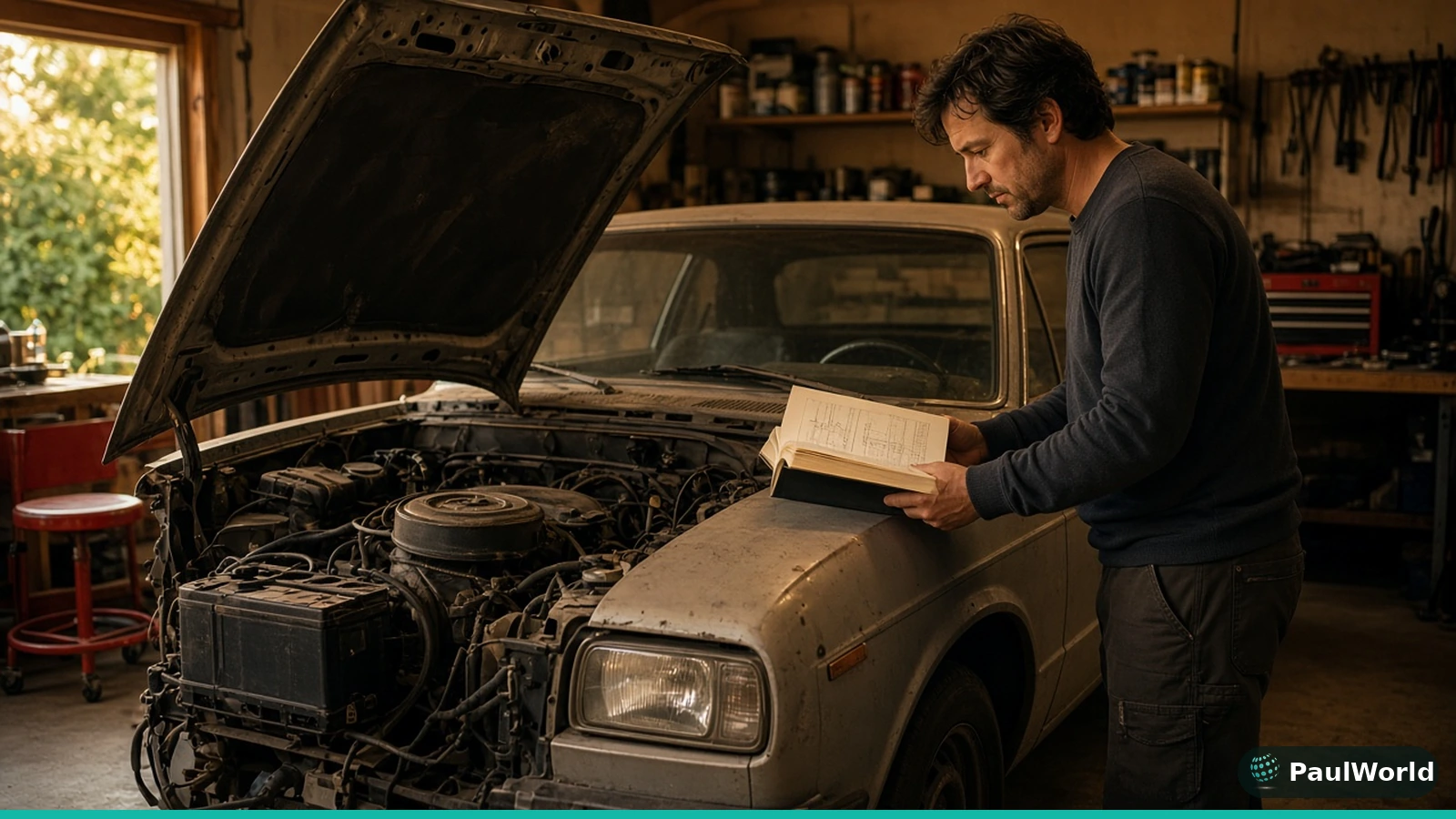
Your car is your best textbook. Read the owner’s manual cover to cover: it shows where every fluid goes, what each warning light means, the maintenance schedule, and the correct oil and tire pressure. Then get a repair manual or service information for your exact year, make, model, and engine. Open the hood and match what you read to what you see: find the dipstick, oil fill cap, coolant reservoir, brake fluid reservoir, air filter box, battery, and fuse boxes.
Step 3: Start With Beginner Jobs
Learn by doing small jobs where mistakes are cheap and safe. A good order:
- Check and top off fluids; check tire pressure and tread.
- Replace the engine and cabin air filters and the wiper blades.
- Replace a bulb and check a fuse.
- Change the oil and filter.
- Read trouble codes with an OBD-II scanner.
- Rotate the tires, then move on to brake pads with a manual in hand.
When something breaks, use our diagnosis-first process on how to fix a car yourself instead of guessing.
Where Can I Work on My Car?
Not everyone has a garage. Options include:
- Your driveway or garage: check local rules and any HOA or lease restrictions first, and always use a drip pan.
- DIY or self-service garages: some cities have shops that rent bays, lifts, and tools by the hour.
- Community college or adult education auto classes: many let students work on their own cars in the school shop.
- A friend’s or family member’s garage: often the best way to learn, especially from someone experienced.
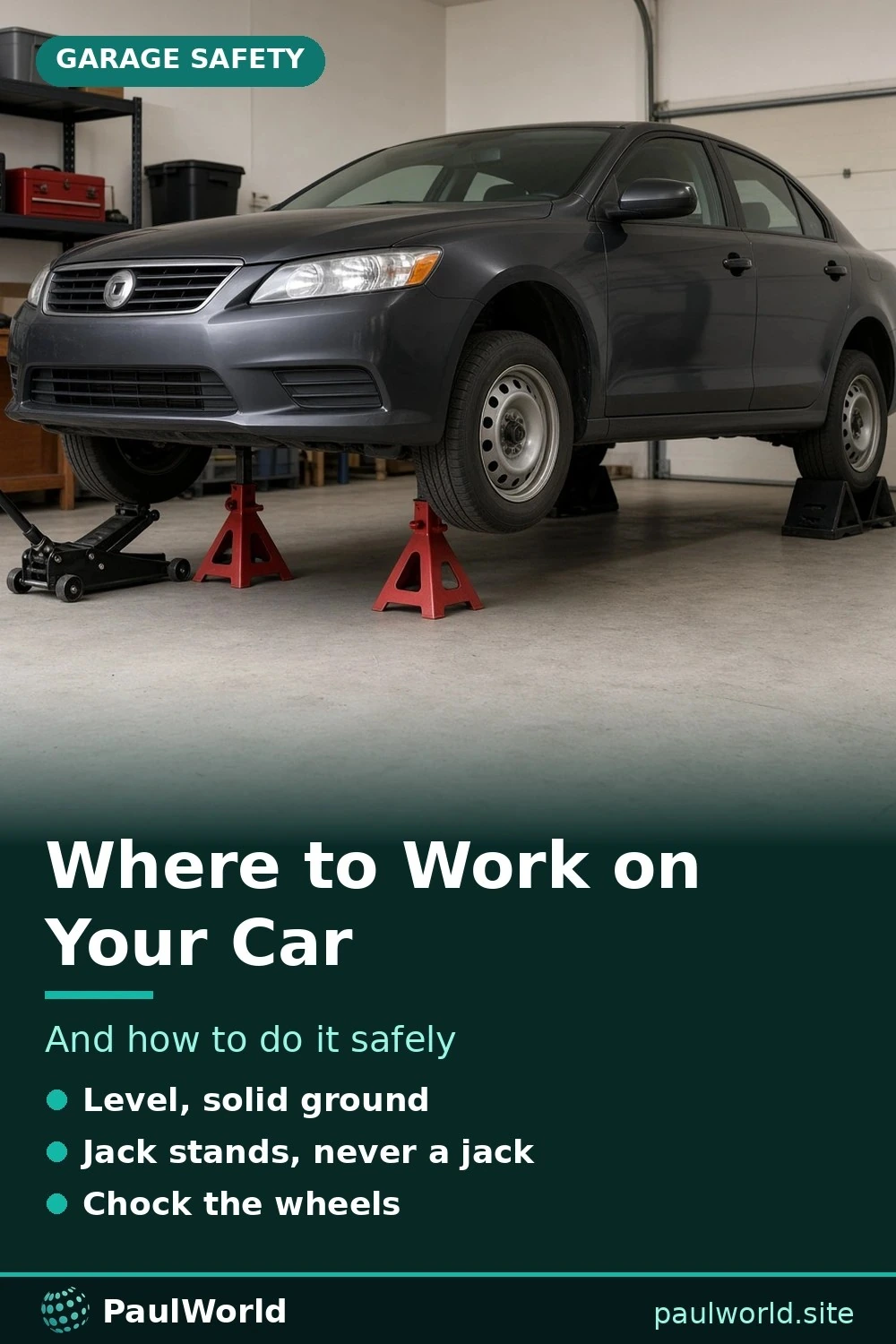
Wherever you work, use a level, solid surface and never get under a car supported only by a jack. Use jack stands and wheel chocks.
Best Ways to Learn Car Mechanics
| Method | Cost | Best for |
|---|---|---|
| Repair manuals and service information | Low | Exact procedures and specs for your car |
| Online videos and articles | Free | Seeing a job done before you try it |
| Community college classes | Moderate | Structured lessons with shop access and an instructor |
| Working in a shop (lube tech, helper) | You get paid | Learning fast from professionals |
| Car clubs and forums | Free or low | Model-specific tips and troubleshooting help |
Online videos are useful, but check them against your repair manual, because procedures and torque specs differ between vehicles.
How to Start Working on Engines
Engines can feel intimidating, so start with jobs on the outside before going inside:
- Spark plugs and ignition coils
- Serpentine belt and inspection of pulleys
- Thermostat and coolant hoses
- Throttle body and sensor cleaning or replacement
Once you are comfortable, a used small engine (like a lawn mower engine) or a junkyard engine on a stand is a great, low-risk way to practice teardown and reassembly before you work inside your daily driver’s engine.
Learning on Old Cars
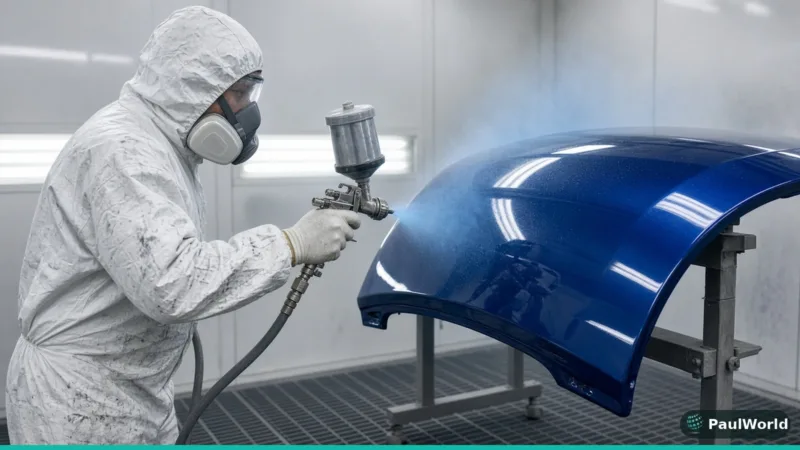
Older cars, especially pre-1990s models, often have simpler systems, more space in the engine bay, and fewer electronics, which makes them easier to understand. The trade-offs are rust, worn parts, and sometimes hard-to-find components. If you buy an older project car, choose a popular model with good parts availability and an active owner community, and expect to spend time on brakes, fuel, and wiring first. Many learners also take on body and paint work; our guide on how to spray automotive paint explains what that involves.
Learn Car Electrical Skills Early
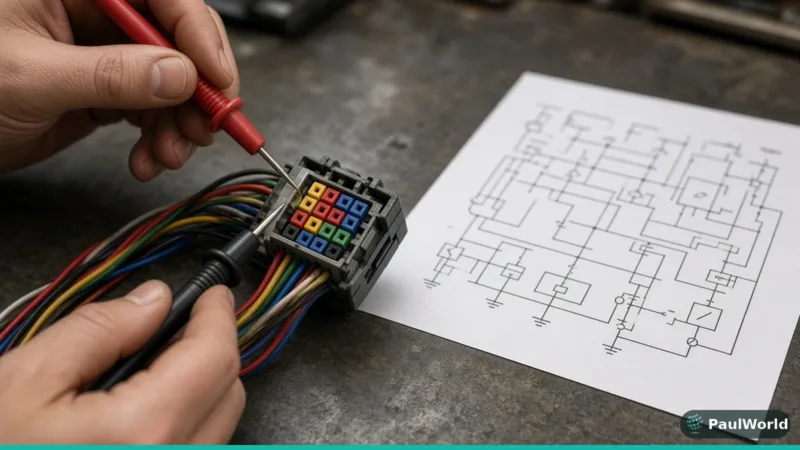
Modern cars rely heavily on electronics, and electrical faults stump many beginners. Buy a digital multimeter, learn to measure voltage and continuity, and practice reading automotive wiring diagrams. This one skill will set you apart.
A 30-Day Plan to Go From Zero to Confident
Learning about cars sticks best when you mix reading with hands-on time. Here is a realistic month at a few hours a week:
| Week | Learn | Do |
|---|---|---|
| 1 | The main systems: engine, drivetrain, electrical, cooling, brakes, suspension | Open the hood and identify every fluid reservoir with your owner’s manual |
| 2 | How the engine works and what oil, coolant, and filters do | Check all fluids and tire pressures; replace the engine air filter |
| 3 | Brakes, tires, and suspension basics | Inspect brake pads through the wheel and measure tire tread |
| 4 | Electrical basics and trouble codes | Read your car’s codes with an OBD-II scanner and test the battery with a multimeter |
Free and Low-Cost Ways to Learn, Compared
| Resource | What it is good for | Watch out for |
|---|---|---|
| Your owner’s manual | Fluid specs, maintenance schedule, fuse locations | Little repair detail |
| Model-specific repair manual | Step-by-step procedures and torque specs | Buy the one for your exact year and engine |
| Free online courses and textbooks | Structured explanations of every system | Mostly theory; add hands-on practice |
| Video tutorials | Seeing a job done before you try it | Quality varies; compare two or three |
| Owner forums and car clubs | Known problems and fixes for your model | Verify advice against a manual |
| Community college night classes | Supervised shop time with real tools | Fees and schedules vary |
Pro tip: Pick one car and learn it deeply. Knowing every system in one vehicle teaches you more than skimming twenty.
Common mistake: Starting with a complicated project, like an engine swap, before mastering maintenance. Early frustration is the number one reason beginners give up.
How to Practice Safely When You Are Just Starting
- Work in daylight or with good lighting, on level ground, with the parking brake set.
- Wear safety glasses and nitrile gloves; brake dust and used oil are not skin-friendly.
- Take photos before you disconnect anything, and bag and label bolts as they come out.
- Use jack stands every time the car is lifted.
Reference: U.S. Department of Energy (FuelEconomy.gov): Keeping Your Vehicle in Shape
Frequently Asked Questions
How hard is it to learn to work on cars?
Basic maintenance is easy to learn in a few weekends. Diagnosis and larger repairs take longer, but steady practice on your own car builds skill quickly.
Can I teach myself car mechanics?
Yes. Many hobbyists and even professional technicians started self-taught using manuals, videos, and their own cars. A class or shop job can fill gaps faster.
What should every car owner know?
How to check the oil and tire pressure, what the main warning lights mean, how to jump-start a battery, how to change a flat tire, and when the car is due for maintenance.
What tools do I need to start learning?
A metric socket set and ratchet, combination wrenches, screwdrivers, a torque wrench, a floor jack with jack stands, an OBD-II code reader, and a multimeter cover most beginner jobs.
Can I learn about cars without going to school?
Yes. Many enthusiasts and even some professionals learned through repair manuals, online courses, videos, and practice on their own cars. School becomes important mainly if you want a career as a technician.
What is the best way to learn about cars and engines?
Combine a structured source, such as a course or textbook, with hands-on work on a real car. Start with maintenance tasks, then move to simple repairs as you understand each system.
Your Next Step
Pick one beginner job from the list above and do it this weekend. If you find you love the work, our guide on how to become a mechanic shows how to turn the hobby into a career.
Categories
Tags